
This page was translated automatically and may not be perfect.
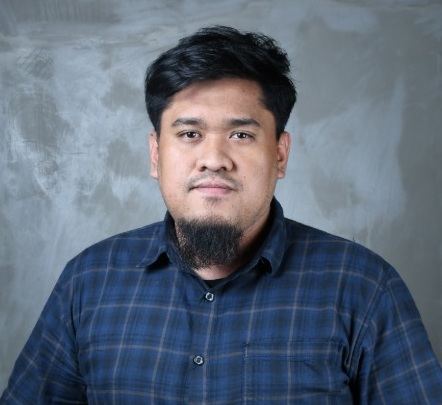
MAKASSAR — Automatic speech recognition technology has so far worked best for the world's major languages. A group of Indonesian Muslim University (UMI) researchers is trying to fill that gap by developing an artificial intelligence system capable of recognizing speech in the Makassar dialect, which is said to be the first in the world for this dialect.
This research is considered important for the preservation of regional languages as well as for the digital inclusion of more than 700 local languages that live in Indonesia.
Gaps in Voice Recognition Technology
The lead author of the research, Huzain Azis, lecturer at the UMI Faculty of Computer Science, explained that Automatic Speech Recognition (ASR) technology is generally only optimal for languages such as English or Mandarin, where data is abundant.
"Regional languages and dialects with limited data availability, including the Makassar dialect, are almost untouched by this technology," said Huzain Azis, Monday (29/6).
He added that the Makassar dialect is spoken by around nine million people in South Sulawesi and has its own phonetic characteristics, including distinctive particles such as mi, Ji, And ko which appears very often in everyday conversation.
The research team consisted of Huzain Azis, Muh Fatwah Fajriansyah M, Herdianti Darwis, Purnawansyah, Tasrif Hasanuddin, and Sugiarti, all UMI academics.
Four Models Tested
The team evaluated four leading ASR models, namely Whisper in tiny, base and small versions, and Wav2Vec2 Large XLSR Indonesia. The test used 305 spontaneous utterances with a total duration of around 10 minutes which were recorded directly from 10 native speakers of the Makassar dialect.
The results are far from satisfactory. The best performing model, Wav2Vec2 Indonesia, still recorded a Word Error Rate (WER) of 87.73 percent, or an accuracy of only 12.27 percent. In other words, almost nine out of ten words in the Makassar dialect fail to be recognized.
The team's analysis found two main causes:
- Dialect Particle Blindness— the model was barely able to capture particles typical of Makassar, with an average detection rate of only 2.9 percent.
- Systematic Phonetic Mismatch— systematic phonetic incompatibilities, characterized by 89 cases of vowel confusion.
Both findings suggest that existing models treat dialect features as a nuisance (noise), is not a valid part of the language.
The research results were published in a journal entitled “Development of a Low-Resource Automatic Speech Recognition System for the Makassar Dialect”. The researchers emphasized the need for a Makassar dialect-specific dataset and the adaptation of models designed to capture local linguistic features, as a step towards fair speech technology for regional language speakers.
PDTI Perspective
PDTI views this research as relevant for the development of campus digital services. As voice-based interfaces and AI assistants become more common, the finding that common models fail to understand local dialects is a reminder that technology needs to be tested in the user's own context before being implemented.
For PDTI, the work of this lecturer at the Faculty of Computer Science also shows the potential for collaboration between researchers and information technology managers within UMI. PDTI is ready to support the artificial intelligence research ecosystem on campus, including through infrastructure and responsible data management.
Excerpted from: umi.ac.id